
Best Albion Online Private Servers 2026 - Full-Loot & Economy Guide
Find the best Albion Online private servers in 2026. Full-loot rules, zone layout, fame and gathering rates, market size and wipes, ranked by real player votes.
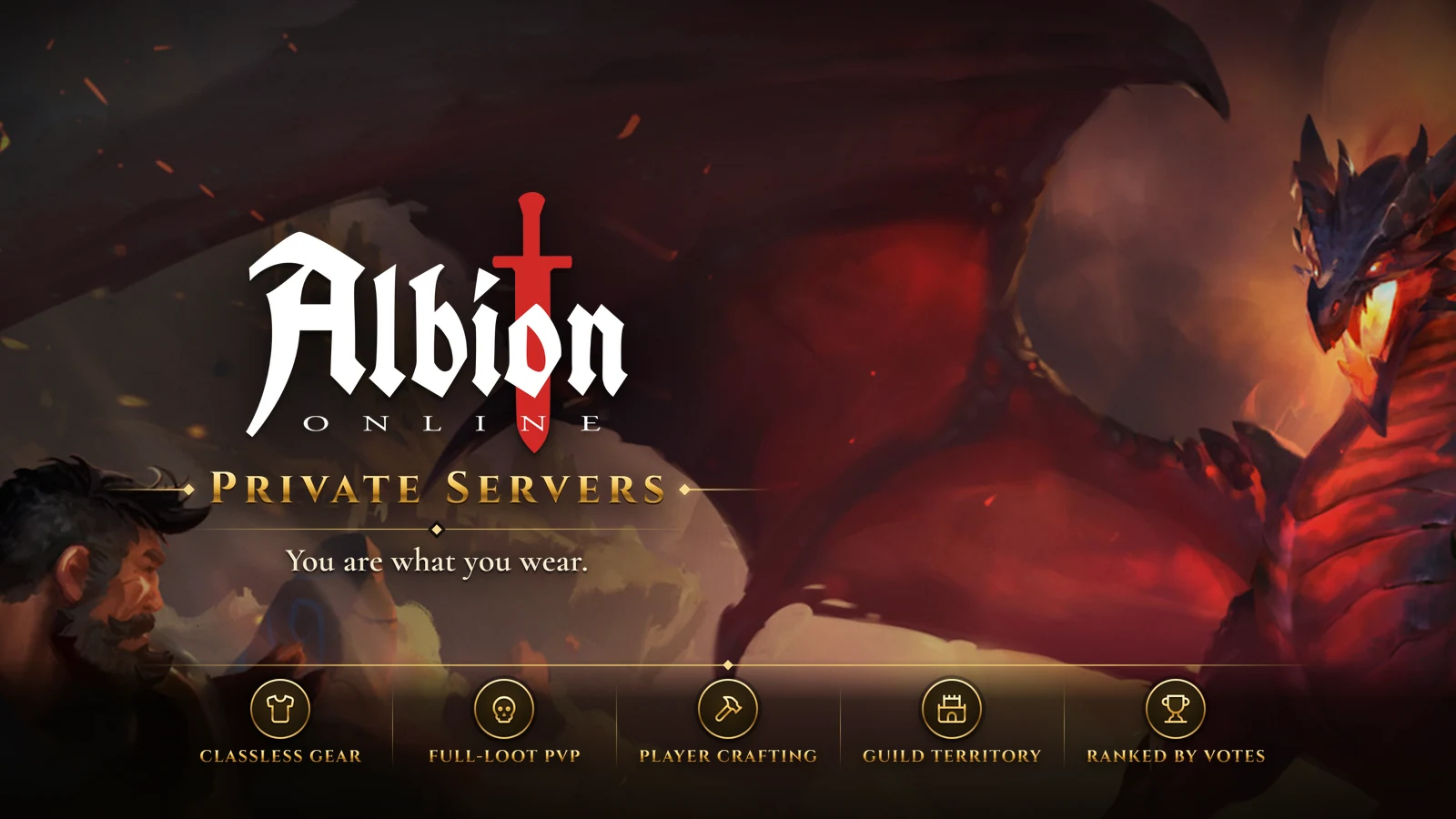
Albion Online is Sandbox Interactive's sandbox MMORPG, launched in 2017 and built around two ideas: there are no classes, and almost everything in the world is made by players. It is very much alive. The official game runs servers for the Americas, Asia and Europe, PC and mobile players share the same worlds, and an Xbox version joined them in April 2026, while updates through 2026 have reworked faction warfare and the look of the open world.
That makes Albion private servers a niche. The usual reasons players leave an MMO for a fan-run server - a closed official service, an era that no longer exists - mostly do not apply here, and fan projects are rare. Where they do appear, they tend to offer what the official game cannot: a small, fresh world, different rates, or experimental rules. This guide covers what matters if you are weighing one.
You Are What You Wear
In Albion your gear is your class. Each weapon, helmet, chest piece and pair of boots brings its own abilities, so swapping a staff for a crossbow changes your role on the spot. Progress is tracked on the Destiny Board, where fame earned with each item line unlocks higher tiers and specializations, and gathering, refining and crafting have their own branches. A dedicated crafter is as real a career as a dedicated fighter.
The economy is the other half. Nearly every sword, bag and mount comes from player crafters, and gear is lost when you die in the dangerous zones, so the market never runs out of demand. The world is split by risk: safe blue zones, yellow zones with limited PvP, and red and black zones where death means full loot. Guilds fight over territory in the black zones, factions tied to the royal cities battle for provinces, and dungeons, Hellgates, the Mists and the Roads of Avalon add PvE and small-group PvP on top.
What to Look For in an Albion Online Private Server
How Much of the Game Exists
Albion is a huge, interlocking system: zone tiers, gathering nodes, refining chains, crafting stations, territories and dozens of weapon lines. A fan-run server has to recreate all of it, and gaps show up fast in a game where everything depends on everything else. Check which zones, item tiers and activities actually work before you invest time.
Full-Loot Rules and Zone Layout
Full loot is what gives Albion its tension, and changing it changes the game. Look at where full loot applies, whether the server keeps the blue-to-black risk ladder, and how flagging works. A server that removes the risk also removes the reason gear has value.
Fame, Gathering and Silver Rates
Raised rates speed up the Destiny Board, but in a player-made economy they also flood the market. If gathering and crafting are too fast, every item is cheap and losing gear stops mattering. Moderate rates usually keep both fighters and crafters busy.
Market Population and Wipes
A player-driven economy needs players. With too few people, buy orders sit unfilled and crafters have no one to sell to. Check the active population, and whether the server plans regular wipes or seasons so new players can still compete for territory.
Shop and Premium Policy
The official game sells gold and premium status, which can be traded for silver in game. On any other server, check what the shop sells. Selling gear or resources directly undercuts the crafters the whole economy depends on.
Verdict
For most players, the official worlds are the benchmark: free to play, full-featured and busy. A fan-run Albion server is worth trying when it offers something those worlds do not, such as a fresh start or rules you prefer, and when it has enough players to keep its market alive. If you find one you enjoy, vote for it. The ranking below lists the Albion Online servers players vote for here, and it starts again every month.
Top Albion Online Private Servers (2026)
No Albion Online private servers are listed yet. Servers added to the site appear here, ranked by this month's player votes.
Frequently Asked Questions
What is the best Albion Online private server in 2026?
No Albion Online private server is listed here yet. The first ones to be added appear in the ranking on this page, ordered by this month's votes.
How many Albion Online private servers are there?
None are listed here yet. A Albion Online private server added to the site appears in this ranking as soon as it is active.
How often are these rankings updated?
The ranking is read live from this month's vote counts, so it changes as players vote. Its order last changed on October 13, 2026.
How We Rank Albion Online Servers
Servers are listed by the number of counted votes they received this month, most first. Each player can vote for a server once every 24 hours, and every vote is checked for VPNs, proxies and bots before it counts. Vote counts start again from zero on the 1st of every month, and a server that goes 14 days without a counted vote is hidden from the lists until it gets one. Player reviews and ratings are shown on each server's page but do not change its position. How rankings work has the full rules.
- Ordered by this month's counted votes
- One vote per server every 24 hours
- VPN, proxy and bot checks on every vote
- A fresh start on the 1st of every month