
Best Blade and Soul Private Servers 2026 - Class & Combat Guide
Find the best Blade and Soul private servers in 2026. Client versions, class roster, combo combat, PvP balance and shop policy, ranked by real player votes.
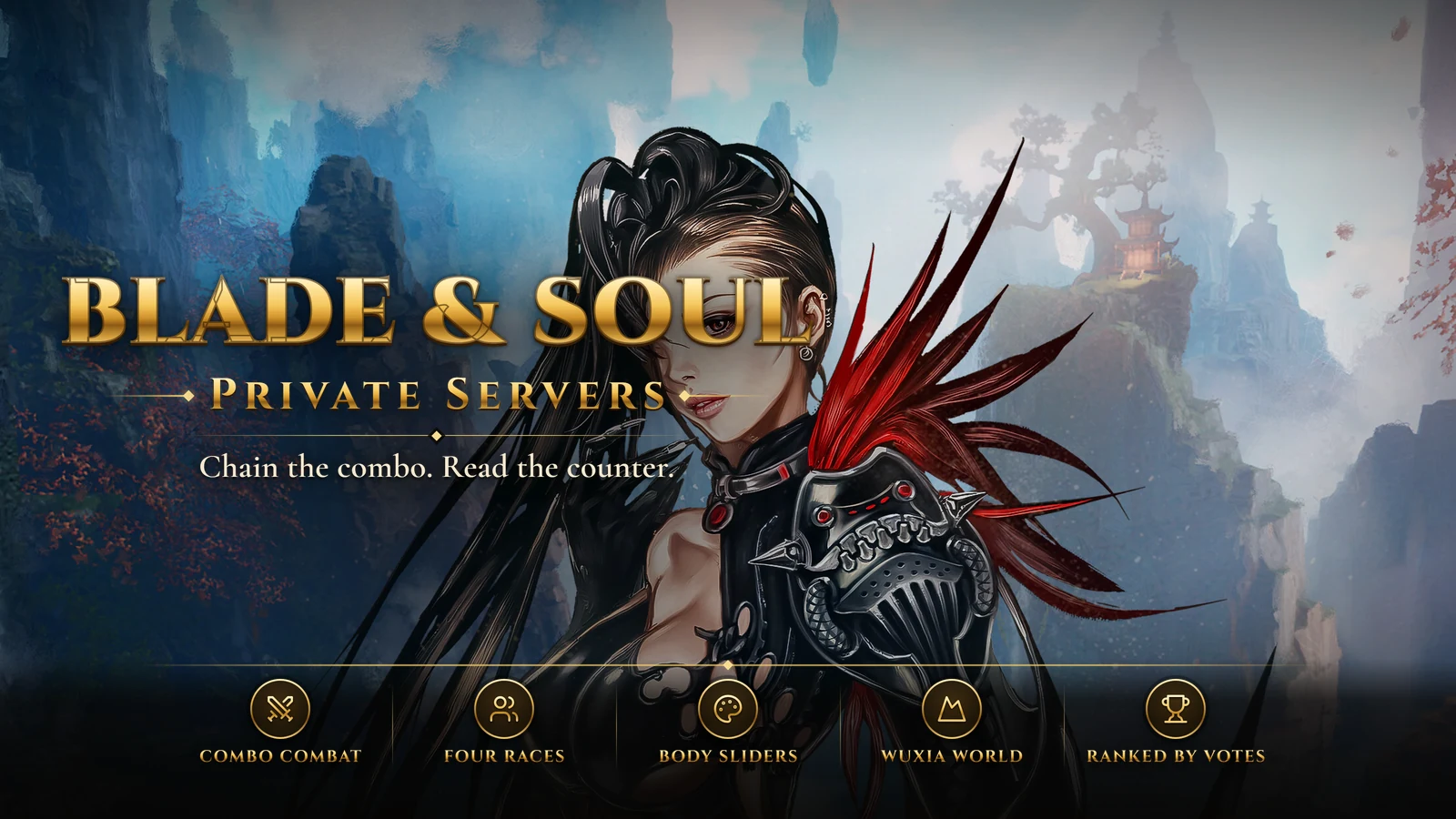
Blade & Soul is a wuxia MMORPG from NCSoft's Team Bloodlust, released in Korea in June 2012, then in China and Japan, and in North America and Europe in January 2016. Its combat plays more like a fighting game than a typical MMO: you chain attacks into combos, time your defensive skills, and can even claw your way back from a downed state. Four races drawn from the Chinese Four Symbols and one of the most detailed character creators of its generation completed the picture.
The official game lives on in more than one form. The original moved to Unreal Engine 4 with the Revival update in 2021, and in February 2025 NC launched Blade & Soul NEO, a modern remaster of the original, in North America, South America and Europe. Private servers are a small, fan-run and unofficial niche alongside all that, usually built around an older version of the game for players who miss a particular era or want different progression.
Fighting-Game Combat in a Wuxia World
Each class is a different fighting style. The Blade Master relies on parries, evasion and strong counters with light armor. The Kung Fu Master has a high skill ceiling and rewards players who learn it. The Force Master throws elemental attacks but has little defense and health. The Destroyer swings a giant axe, slow but tough with plenty of control. The Assassin is the class that can stealth and strike by surprise, and the Summoner fights at range while a feline companion keeps enemies busy. The Blade Dancer is exclusive to the Lyn race, and later classes such as the Warlock joined over time.
Race and class are linked. The four races - Gon, Jin, Yun and Lyn - each open only some classes: a Gon can be a Destroyer, Kung Fu Master or Force Master, for example, while a Jin can be an Assassin, Blade Master or Kung Fu Master. The game starts you in PvE through an open world full of quests, and PvP becomes the focus for many players later on.
What to Look For in a Blade and Soul Private Server
Which Version It Runs
Blade & Soul changed a lot over the years, including its engine, gear systems and class skills. A private server is usually based on one particular client, and that decides which classes, dungeons and progression systems exist. Check the version, and make sure the class you want is actually playable.
Combat Responsiveness
A fighting-game style of combat lives on timing. If the server adds delay to skills, counters and defensive moves, the game loses what makes it special. Check where the server is hosted and play a few fights before you invest in a character.
Class Balance in PvP
Counters, stealth and crowd control make for a tight balance between classes. A server that has changed skills should explain why, and the community should be able to tell you which classes are strong right now. If one class dominates PvP, that is worth knowing early.
Progression Pace and Shop
Gear progression on the official game is a long road, and private servers often change the rates. Decide how fast you want to go, then read the shop list. Cosmetic outfits suit a game with this character creator; selling upgrade materials or gear does not suit PvP.
Content That Works
Ask which story chapters, dungeons and raids work fully, and how quickly the team fixes broken bosses. Rebuilt servers vary widely here, and a clear list of working content is the best sign of an honest team.
Official Versions or a Private Server
If you want current content, the remaster and ongoing support, the official versions are the place to start. Private servers make sense when you specifically want an older version or different pacing, and when you accept that they are unofficial projects with a smaller scope.
Choosing Your Fighting Style
Choose your class first and the race second, since the race limits your options. Spend your first hours learning your class's combos and defensive timing - that matters more than any gear. Vote for the server you play on; rankings here start again every month, so the list below follows where players are now.
Top Blade and Soul Private Servers (2026)
No Blade and Soul private servers are listed yet. Servers added to the site appear here, ranked by this month's player votes.
Frequently Asked Questions
What is the best Blade and Soul private server in 2026?
No Blade and Soul private server is listed here yet. The first ones to be added appear in the ranking on this page, ordered by this month's votes.
How many Blade and Soul private servers are there?
None are listed here yet. A Blade and Soul private server added to the site appears in this ranking as soon as it is active.
How often are these rankings updated?
The ranking is read live from this month's vote counts, so it changes as players vote. Its order last changed on October 13, 2026.
How We Rank Blade and Soul Servers
Servers are listed by the number of counted votes they received this month, most first. Each player can vote for a server once every 24 hours, and every vote is checked for VPNs, proxies and bots before it counts. Vote counts start again from zero on the 1st of every month, and a server that goes 14 days without a counted vote is hidden from the lists until it gets one. Player reviews and ratings are shown on each server's page but do not change its position. How rankings work has the full rules.
- Ordered by this month's counted votes
- One vote per server every 24 hours
- VPN, proxy and bot checks on every vote
- A fresh start on the 1st of every month