
Best DDTank Private Servers 2026 - Angle, Power & Wind Guide
Find the best DDTank private servers in 2026. Classic vs modern versions, shop and gear power, matchmaking and aim-helper rules, ranked by real player votes.
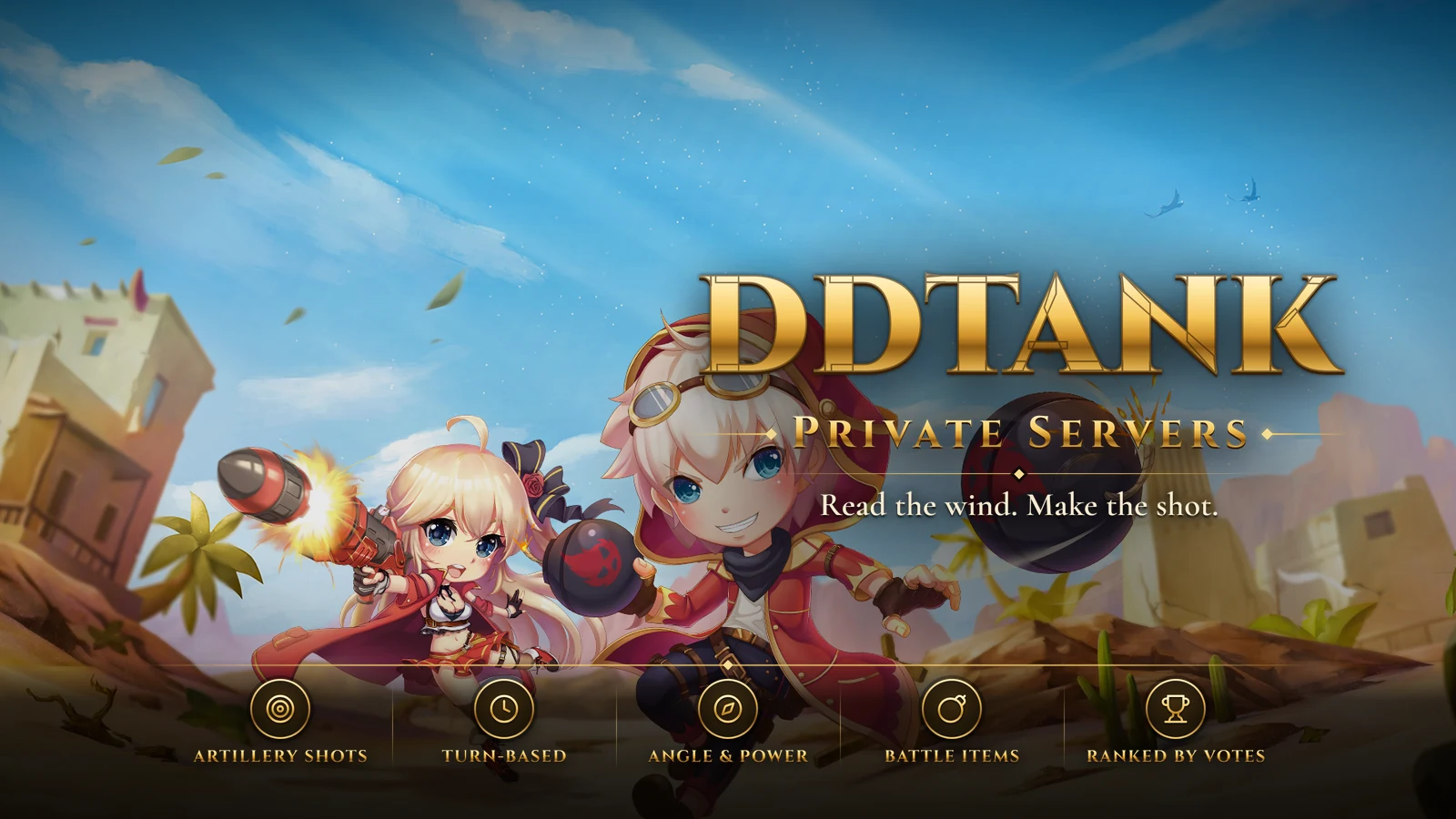
DDTank is a turn-based shooting game from the Chinese studio 7Road that started life in the web browser. Cute chibi characters take turns firing across 2D maps, and every win comes down to the arc of a shot: set the angle, judge the power, account for the wind and hope your opponent misjudges theirs.
7Road has since taken the game to phones. DDTank Mobile runs a global server, DDTank Origin reworks the classic web gameplay and is published by VNG Games in Southeast Asia, and a newer Chinese mobile title launched in 2022. The original browser-style game is what most private servers recreate, for players who grew up on it and want that version back, often with their own rates and shop rules.
How a DDTank Match Works
A match is a series of turns. On yours, you aim along a trajectory and fire, then wait while the other side does the same. The skill is in reading the battlefield: distance, height, and above all the wind, which pushes every shot. Experienced players work out angle and power almost by instinct, and that is the part of DDTank people remember most fondly - the moment a long shot curves in exactly where you wanted it.
Shots are only part of a turn. You carry battle items into a match, and a common approach is to mix damage items with utility ones. Abilities cost energy, so good players plan two or three turns ahead rather than spending everything at once. The result is a game that is easy to pick up and slow to master, with as much thinking between shots as aiming.
What to Look For in a DDTank Private Server
Classic or Modern Version
Servers differ in which era of DDTank they recreate and how far they have customized it. Some aim for the classic web version as closely as possible; others add newer weapons, items and modes. If you are chasing the game you remember, check the item and map lists before you start.
Shop and Gear Power
In a game where damage numbers decide who wins the exchange of shots, gear matters a lot. Find out what the shop sells, whether strong weapons and upgrades can be earned through play, and how big the gap is between a free player and a paying one. A server where money outshoots skill rarely keeps its players.
Fair Matchmaking
Turn-based duels are only fun when both sides have a chance. Ask how the server matches players - by level, by gear or not at all - and whether new players spend their first week losing to fully geared veterans.
Client and Connection
Check how you actually play: some servers run in a browser, others through their own launcher or client. Turn-based play forgives a little lag, but disconnects in the middle of a match do not. Look for clear setup instructions and a stable connection at your hours, and if a server needs its own launcher, download it only from that server's official site.
Rules on Aim Helpers
Artillery games attract tools that calculate wind, angle and power for you, and they take the skill out of the game. Read the server's rules on them and see whether the staff actually enforce those rules.
Learning the Wind
Pick a server whose version and shop policy match what you want, then spend your first matches learning how the wind moves your shots - it is the skill everything else rests on. Plan your battle items and energy instead of firing everything on turn one. Vote for the server you play on; rankings here start again every month, so the list below follows where players are now.
Top DDTank Private Servers (2026)
No DDTank private servers are listed yet. Servers added to the site appear here, ranked by this month's player votes.
Frequently Asked Questions
What is the best DDTank private server in 2026?
No DDTank private server is listed here yet. The first ones to be added appear in the ranking on this page, ordered by this month's votes.
How many DDTank private servers are there?
None are listed here yet. A DDTank private server added to the site appears in this ranking as soon as it is active.
How often are these rankings updated?
The ranking is read live from this month's vote counts, so it changes as players vote. Its order last changed on October 13, 2026.
How We Rank DDTank Servers
Servers are listed by the number of counted votes they received this month, most first. Each player can vote for a server once every 24 hours, and every vote is checked for VPNs, proxies and bots before it counts. Vote counts start again from zero on the 1st of every month, and a server that goes 14 days without a counted vote is hidden from the lists until it gets one. Player reviews and ratings are shown on each server's page but do not change its position. How rankings work has the full rules.
- Ordered by this month's counted votes
- One vote per server every 24 hours
- VPN, proxy and bot checks on every vote
- A fresh start on the 1st of every month