
Best Eco Servers 2026 - Meteor, Laws & Economy Server Guide
Find the best Eco servers in 2026. Meteor timers, cycle length, skill settings, laws, player economies and population explained, ranked by real player votes.
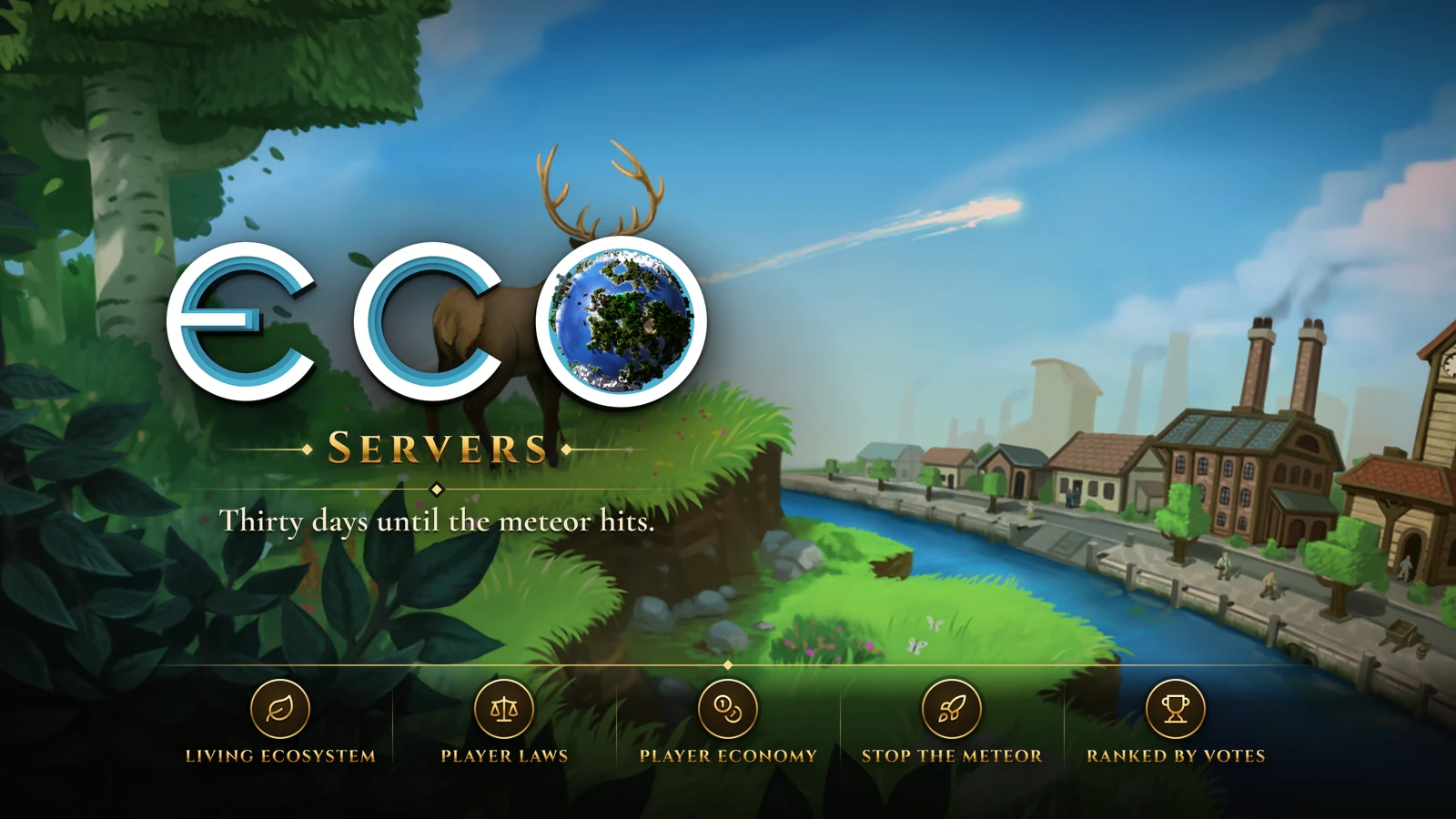
Eco is Strange Loop Games' online survival and civilization game, in early access on Steam since February 2018. The premise is simple and unusual: a meteor is set to strike the planet in thirty days, and the players have to build a civilization advanced enough to stop it, without wrecking the world they live on along the way. Every tree you cut and every field you plow feeds into a fully simulated ecosystem.
Eco ships with a dedicated server so communities can host their own worlds, and that is how most people play it. Because the game is about a whole society working together, the server you join matters more than in almost any other survival game: its settings, its laws and its players are the game.
A Civilization Built by Its Players
Nobody in Eco can do everything. Your skills grow based on the quality of your food and housing, so players pick specialties - farming, mining, smithing, cooking, engineering - and trade for the rest. Players can create their own currencies, backed or fiat, run shops, set exchange rates and post contracts for work. A good Eco server ends up with a real economy, with prices, shortages and businesses that rise and fall.
Over the economy sits a government. Players draft laws, vote on them and run for election, and the game enforces passed laws automatically. A town can tax its citizens, protect its forests, cap pollution or ban hunting a species close to extinction. Meanwhile the ecosystem responds to everything: clear-cutting and pollution have knock-on effects on habitats and farms, so cutting corners to beat the meteor has a cost.
What to Look For in an Eco Server
Meteor Timer and Cycle Length
Thirty days is the default, but servers set their own meteor timers and decide how long a world lasts before it resets. Short cycles turn the game into a race to the technology that stops the meteor. Long cycles give time for detailed towns, deep supply chains and politics. Check how far into its cycle a server is before you join.
Skill and Collaboration Settings
Servers tune how fast skills level and how many specialties one player can hold. Settings that push players to depend on each other create a busy economy but need a decent population. Gentler settings let a small group or a few friends cover more of the tech tree themselves.
Laws, Government and Admins
Some servers start with a constitution and an elected government from day one; others let players build it from nothing. Either way, look for admins who handle griefing and property disputes fairly and stay out of politics they are not part of. A server whose government actually meets and passes laws is a server with a living community.
Population and Late Joiners
An economy needs people. Check how many players are active, not just registered, and whether they play at your hours. If you join mid-cycle, see whether there are still roles to fill and whether the community welcomes newcomers, since late arrivals sometimes find every specialty already taken.
Mods and House Rules
Server mods can add items, quality-of-life tools or new mechanics, and many servers add rules on claims, pollution or roleplay on top of the game's own laws. Read both before you settle. A clear rulebook saves a lot of arguments over land later.
Getting Started
Join a server near the start of a cycle if you can, pick a specialty that the town lacks, and get to know the people you will trade with. Read the active laws in-game and the rules on the server's Discord. The ranking below lists the Eco servers players vote for here. Vote for the server whose civilization you help build - rankings start again every month, so the list follows where players are active now.
Top Eco Servers (2026)
No Eco servers are listed yet. Servers added to the site appear here, ranked by this month's player votes.
Frequently Asked Questions
What is the best Eco server in 2026?
No Eco server is listed here yet. The first ones to be added appear in the ranking on this page, ordered by this month's votes.
How many Eco servers are there?
None are listed here yet. A Eco server added to the site appears in this ranking as soon as it is active.
How often are these rankings updated?
The ranking is read live from this month's vote counts, so it changes as players vote. Its order last changed on October 13, 2026.
How We Rank Eco Servers
Servers are listed by the number of counted votes they received this month, most first. Each player can vote for a server once every 24 hours, and every vote is checked for VPNs, proxies and bots before it counts. Vote counts start again from zero on the 1st of every month, and a server that goes 14 days without a counted vote is hidden from the lists until it gets one. Player reviews and ratings are shown on each server's page but do not change its position. How rankings work has the full rules.
- Ordered by this month's counted votes
- One vote per server every 24 hours
- VPN, proxy and bot checks on every vote
- A fresh start on the 1st of every month