
Best Infestation Private Servers 2026 - Survival & PvP Rules Guide
Find the best Infestation private servers in 2026. PvP and reputation rules, death penalties, loot economy, anti-cheat and wipes, ranked by real player votes.
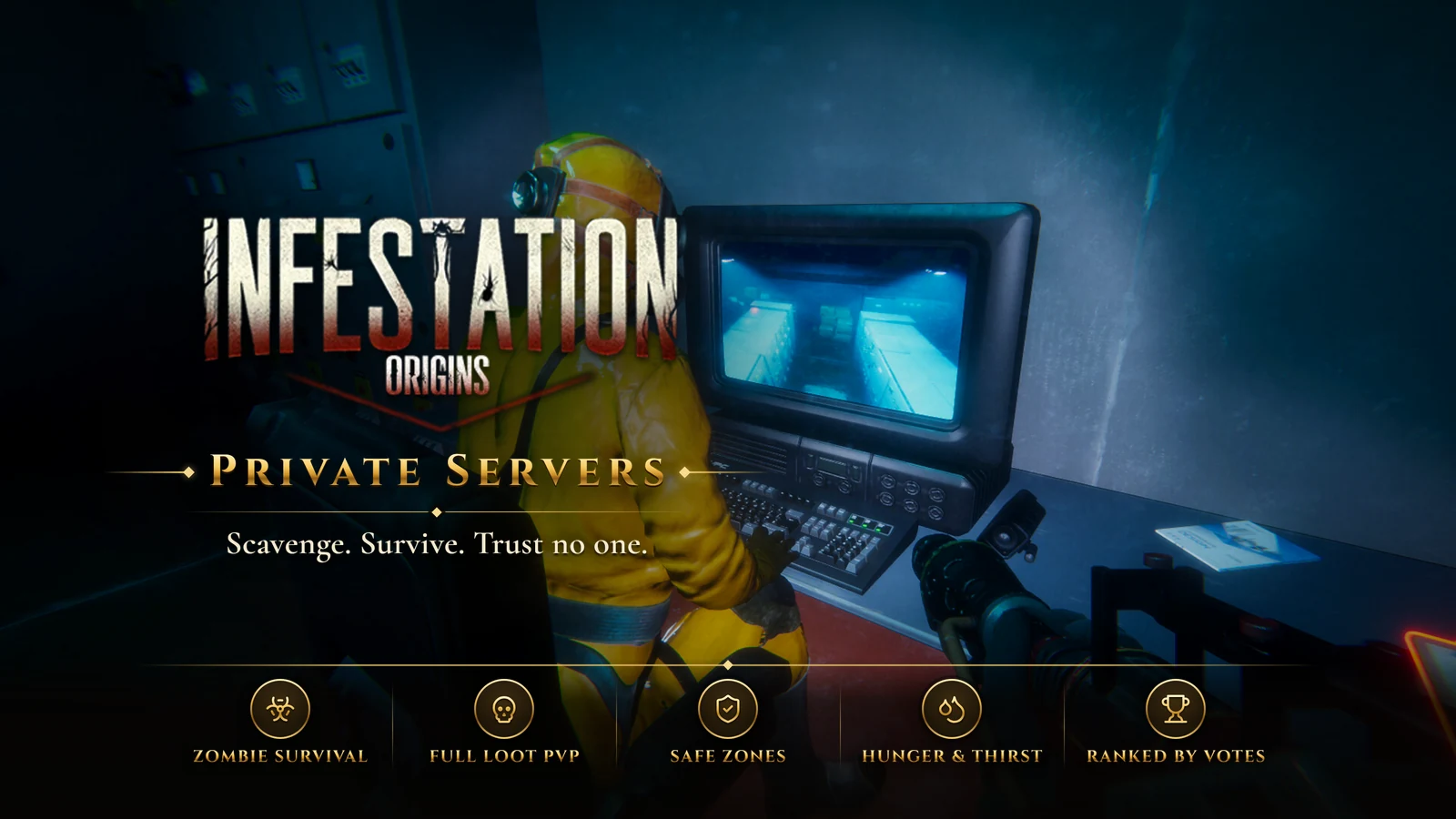
Infestation: Survivor Stories is an open-world zombie survival game from Hammerpoint Interactive and OP Productions. It came out on Steam in December 2012 under its original name, The War Z, and was renamed in June 2013. The formula is simple and harsh: scavenge for food, water, weapons and ammo, keep your character fed and hydrated, avoid or fight the zombies, and remember that every other survivor you meet can take everything you are carrying.
The official servers shut down on December 15, 2016, and a reboot, Infestation: The New Z, followed from another studio. Fan-run private servers keep the original's formula going today with rules of their own - fitting for a game that already let players rent their own private servers back when it was official.
Scavenge, Survive, Lose It All
Survival comes first. Hunger and thirst drain constantly, so every trip out of safety is partly a supply run. Safe zones give you somewhere to breathe, with a shared Global Inventory for stashing what you have found and a General Store. Beyond them, zombies are only half the threat.
Death is expensive. When your character dies, other players can recover the items you were carrying, and a respawn timer keeps that character out of play for a while - one hour at launch, raised to four hours at one point, then returned to one. Progression is split between survival and reputation: zombie kills earn XP for a skill tree, while killing other players changes your reputation, so the community can see who has been shooting first. The official shop sold cosmetic and convenience items such as ammo.
What to Look For in an Infestation Private Server
PvP and Reputation Rules
This is the main thing that separates one Infestation server from another. Some lean into full PvP, others protect new players or reward cooperation. Check how reputation works, whether killing near safe zones is punished, and whether the rules are actually enforced.
Death Penalty and Respawn
Find out how long the respawn timer is and what you lose on death. A long timer makes every encounter tense; a short one makes the game faster and more forgiving. Neither is wrong, but you should know which one you are signing up for before your first supply run.
Loot Economy and Shop
Loot spawn rates decide how quickly you can rebuild after a death. Very generous loot makes losing gear meaningless; very scarce loot can make starting over feel hopeless. Also read the shop list: if weapons, armor or ammo can be bought for money, the survival economy stops being about survival.
Cheating in a Full-Loot Game
A survival shooter where you can lose everything is a magnet for cheaters. Look for an active anti-cheat, visible bans and admins who respond to reports. One cheater in a populated area can ruin an evening for dozens of players.
Wipes and Population
Ask whether the server wipes characters and stashes, and how often. Then check the population at your hours - an empty map is a quiet game, and an overcrowded safe zone is a different kind of problem. The right size depends on whether you like tense encounters or long solo scavenging trips.
Surviving Your First Day
Read the server's PvP and death rules before you leave the safe zone, carry only what you can afford to lose, and keep a stash in the Global Inventory to rebuild from. Find a group if you can, because survival is easier with someone watching your back. Vote for the server you play on; rankings here start again every month, so the list below follows where players are now.
Top Infestation Private Servers (2026)
No Infestation private servers are listed yet. Servers added to the site appear here, ranked by this month's player votes.
Frequently Asked Questions
What is the best Infestation private server in 2026?
No Infestation private server is listed here yet. The first ones to be added appear in the ranking on this page, ordered by this month's votes.
How many Infestation private servers are there?
None are listed here yet. A Infestation private server added to the site appears in this ranking as soon as it is active.
How often are these rankings updated?
The ranking is read live from this month's vote counts, so it changes as players vote. Its order last changed on October 13, 2026.
How We Rank Infestation Servers
Servers are listed by the number of counted votes they received this month, most first. Each player can vote for a server once every 24 hours, and every vote is checked for VPNs, proxies and bots before it counts. Vote counts start again from zero on the 1st of every month, and a server that goes 14 days without a counted vote is hidden from the lists until it gets one. Player reviews and ratings are shown on each server's page but do not change its position. How rankings work has the full rules.
- Ordered by this month's counted votes
- One vote per server every 24 hours
- VPN, proxy and bot checks on every vote
- A fresh start on the 1st of every month