
Best Iris Online Private Servers 2026 - Tarot & Dungeon Guide
Find the best Iris Online private servers in 2026. Tarot enhancement, arcana dungeons, races, rates and client language explained, ranked by real player votes.
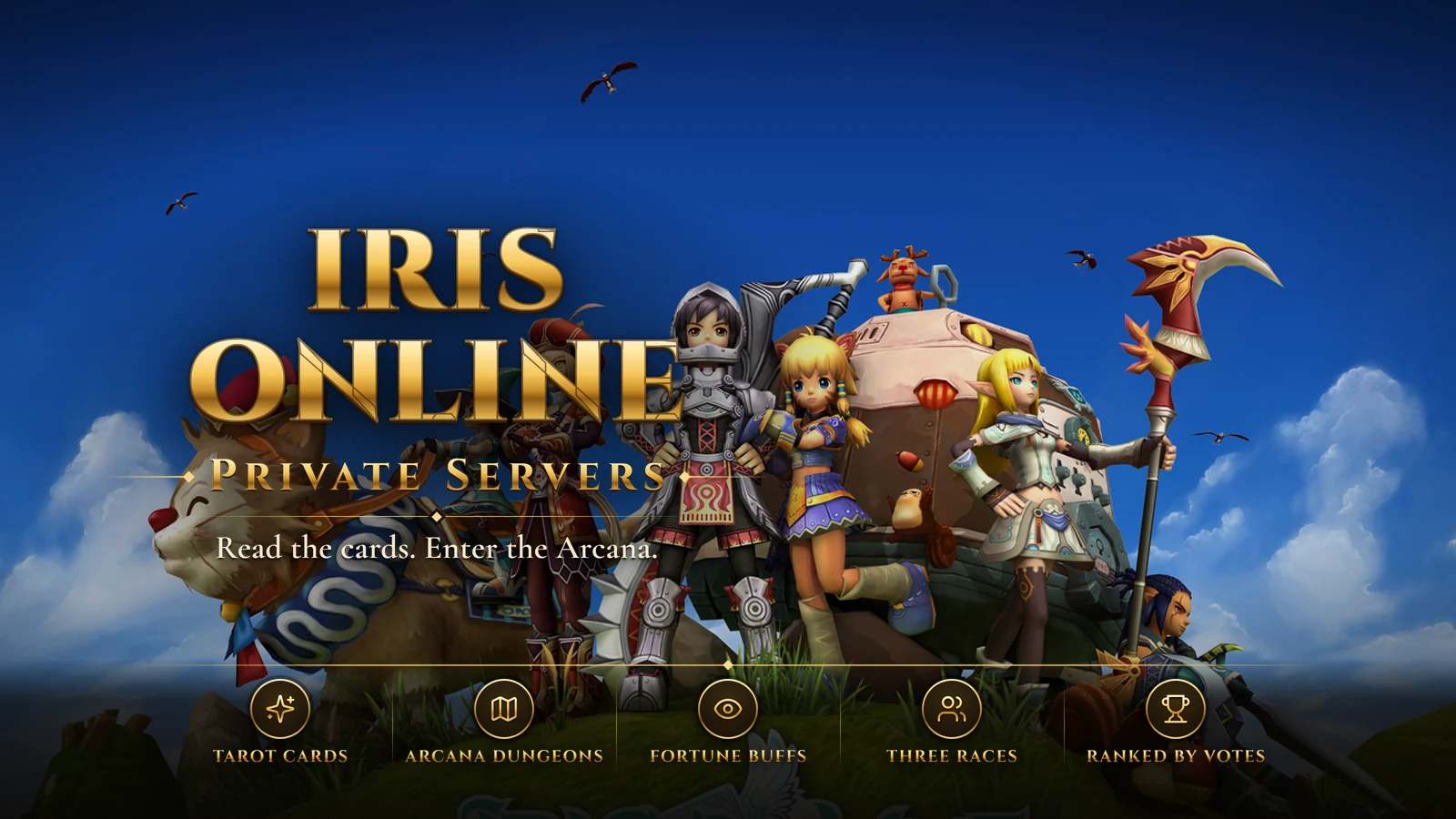
Iris Online is a fantasy MMORPG from EyaSoft, the Korean studio behind Luna Online, published in the West by Gala-Net's gPotato portal, which opened its closed beta in October 2010. It wrapped a bright anime look around an unusual theme: a gypsy-inspired world built on tarot cards, where fortune-telling is a game system rather than decoration. The official service ended in 2012, so fan-run private servers are the only way to play it now.
Iris never had a long official life, and private servers for it are rare and usually small. That makes judging a server carefully even more important. This guide covers what the game is and what to check before you invest your time.
Tarot Cards, Arcana Dungeons and Three Races
The tarot system runs through everything. Cards are used to enhance weapons and armor, and having your character's fortune told grants buffs, so a reading before a hard fight becomes part of the routine. The world's 22 dungeons are each tied to one of the Major Arcana, the 22 trump cards of the tarot deck, which gives every dungeon its own theme and look. More than a thousand quests fill out the road between them.
Characters come from three races - Humans, Elves and Hybrids - each with its own classes, and later advancement lets you specialize further, for example toward magical attack or support. Between the race, the class path and the cards you build around, two characters of the same class can end up playing quite differently.
What to Look For in an Iris Online Private Server
How complete the game is
With 22 arcana dungeons and over a thousand quests, a lot can be broken or missing on a rebuilt server. Check which dungeons actually work, whether the main quest chains can be completed, and how quickly the staff respond to bug reports. A server that is honest about what is unfinished is a better bet than one that claims everything works.
Tarot enhancement odds
Card-based enhancement is the heart of gear progression. Check the success rates, what happens when an attempt fails, and whether the cards themselves drop in play or mainly come from a shop. If the best cards can only be bought, the gear game is decided by spending.
Rates and level cap
Small communities usually do better with faster rates, so players reach the later arcana dungeons together instead of drifting apart. Check the EXP and drop rates and the level cap, and whether the server has changed anything about class advancement.
Card text and translation
Iris was released in more than one language edition. A private server built on one of them may have rough or partial translation, which hurts in a game where card and fortune descriptions carry so much information. Check that quests and card text are readable for you.
Staff and stability
For a niche game, a server's future rests on a small team. Look for a visible history, regular updates and a community channel where staff answer questions. Never reuse a password from another game on a fan-run server.
Getting Started
Pick a race and class that suit you, learn how tarot enhancement works on that server before you spend rare cards, and take the arcana dungeons on with a group when you can. In a small community, the players you meet in your first week are the ones you will raid with for months. Vote for the server you play on; rankings here start again every month, so the list below shows where players are now.
Top Iris Online Private Servers (2026)
No Iris Online private servers are listed yet. Servers added to the site appear here, ranked by this month's player votes.
Frequently Asked Questions
What is the best Iris Online private server in 2026?
No Iris Online private server is listed here yet. The first ones to be added appear in the ranking on this page, ordered by this month's votes.
How many Iris Online private servers are there?
None are listed here yet. A Iris Online private server added to the site appears in this ranking as soon as it is active.
How often are these rankings updated?
The ranking is read live from this month's vote counts, so it changes as players vote. Its order last changed on October 13, 2026.
How We Rank Iris Online Servers
Servers are listed by the number of counted votes they received this month, most first. Each player can vote for a server once every 24 hours, and every vote is checked for VPNs, proxies and bots before it counts. Vote counts start again from zero on the 1st of every month, and a server that goes 14 days without a counted vote is hidden from the lists until it gets one. Player reviews and ratings are shown on each server's page but do not change its position. How rankings work has the full rules.
- Ordered by this month's counted votes
- One vote per server every 24 hours
- VPN, proxy and bot checks on every vote
- A fresh start on the 1st of every month