
Best Lineage 2 Private Servers 2026 - Chronicle & Rates Guide
Find the best Lineage 2 private servers in 2026. Interlude vs High Five, low-rate vs PvP rates, sieges and shop policy explained, ranked by real player votes.
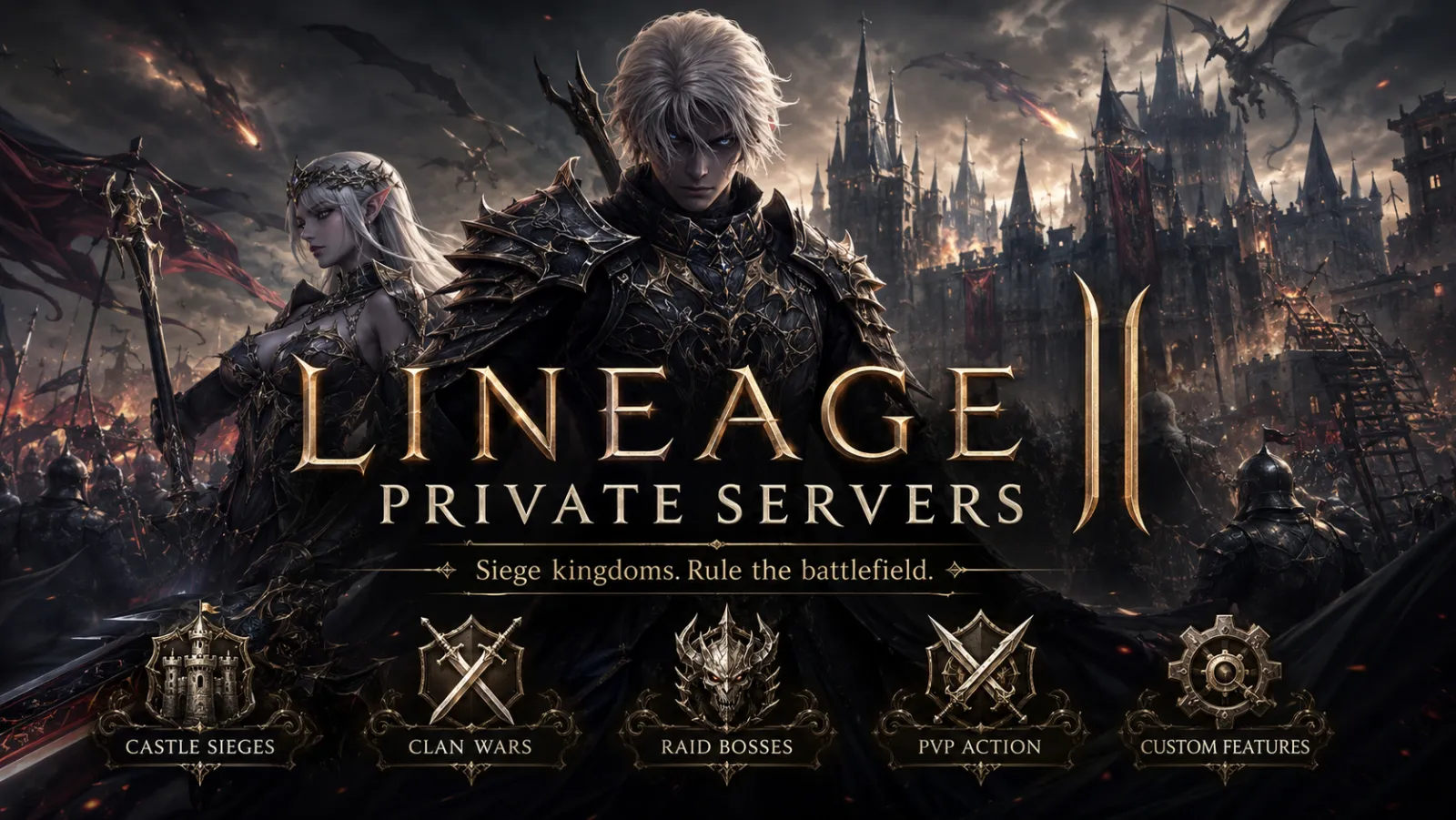
Lineage II is NCSoft's fantasy MMORPG, launched in Korea in 2003 and in North America and Europe in 2004, and set 150 years before the original Lineage. It became famous for PvP on a grand scale: clans fighting over castles, alliances racing each other to epic raid bosses, and an open world where meeting the wrong player could cost you your evening. The official game, free to play since 2011, has since split into several versions, including Classic and Essence alongside the main live game.
Lineage II also has a private-server scene that has been running since the mid-2000s. Fan-run servers bring back the chronicles players remember best, above all Interlude and High Five, at rates that range from slow, retail-like progression to servers where you are fighting in full gear within the hour.
Castles, Clans and Epic Bosses
You choose from Humans, Elves, Dark Elves, Orcs and Dwarves - the game's master craftsmen - with the Kamael arriving in 2007 and the Ertheia much later. Classes branch at set levels, and subclasses let a character learn further classes over time. But the heart of Lineage II is the clan. Clans fight castle sieges for Gludio, Dion, Giran, Oren, Aden and the castles added later, alliances compete for epic raid bosses such as Antharas, Valakas, Baium and Zaken, and the Seven Signs, added in 2005, pitted Dawn against Dusk in a server-wide contest for the Seals.
Open PvP is governed by a karma system that marks and punishes players who kill those who do not fight back. That risk makes the world feel dangerous in a way few modern MMOs do, and it is a big part of why clans, alliances and grudges matter so much.
What to Look For in a Lineage 2 Private Server
The chronicle
The chronicle decides the classes, skills, items, zones and endgame. Interlude, from 2006, is the best-known nostalgia chronicle, with the classic class balance, the Seven Signs and the original epic bosses. High Five, from 2010 and 2011, adds the Kamael and the Gracia and Freya content, and it is the last chronicle before the Goddess of Destruction overhaul. Some servers go further back to the early numbered chronicles; others recreate the newer official Classic and Essence styles.
Rates, all of them
Lineage II servers advertise rates such as x1, x3, x7 or x50, and well beyond. Low rates are the classic experience: weeks of leveling, a real player economy and sieges that mean something. Mid rates shorten the climb but keep crafting and raids relevant. High-rate and PvP servers hand out levels and gear quickly, so the game becomes clan wars and arena fights. Read every rate - EXP and SP, adena, drop, spoil and raid - not just the EXP number.
Server quality and stability
Servers run on different server software, and quality varies a great deal. What matters to you is whether skills, quests, sieges and raid bosses work as they should. Ask how long the server has been running, how its last siege went and how quickly bugs get fixed.
The donation shop
Most Lineage II private servers fund themselves through donations. Look for shops limited to cosmetics and convenience. A server that sells gear, enchant scrolls or stat items is pay-to-win in a game where enchanted gear decides almost every fight.
Bots, boxing and launch timing
Check how many game windows a player may run and whether bots are banned, because both shape the economy and the hunting grounds. Then look at the launch date. Joining at launch puts you on equal footing with everyone else; joining months later means catching up with clans that already hold the castles.
Getting Started
Choose the chronicle first, then the rates, then a server whose launch timing suits you. Pick a class with a clear role in a party, and find a clan early, because Lineage II has always been a clan game - solo players rarely see a siege or an epic boss. Vote for the server you play on; rankings here start again every month, so the list below shows where players are active now.
Top 4 Lineage 2 Private Servers (2026)
Ranked by this month's counted votes. Order last changed November 1, 2026.
Deiceland - High Five - 2024
x30 Skills of ALL profession of class in ONE Charact. x50 Enchant: chance 🔥99%🔥 things DO NOT break x5 C1-C4 classic. The server is just AMAZING! 💥💥 x...
Lineage 2 Scarlet
Lineage 2 Scarlet Freya server. XP Rate 15X, SP Rate: 15X, Max Enchant Rate +20, Safe Enchant Rate +4, Instances and Freya raid / PvP(vE) Areas we hav...
AdeniumWorld
Adenium World — a Lineage II Interlude project featuring two unique worlds: X1 — a stable, no-wipe server with balanced rates and fair economy. X20 ...
God World Online
Game style: MMoRPG Online Game PvP PvE Party Players Chronicles: Goddess of Destruction Linvior Rates: x20 Type: Middle-Rate Farm, Events,...
Frequently Asked Questions
What is the best Lineage 2 private server in 2026?
Based on our live vote rankings, Deiceland - High Five - 2024 is currently the #1 ranked Lineage 2 private server with 15 votes this month.
How many Lineage 2 private servers are there?
We currently track 4 active Lineage 2 private servers on our platform, ranked by this month's counted votes.
How often are these rankings updated?
The ranking is read live from this month's vote counts, so it changes as players vote. Its order last changed on November 1, 2026.
How We Rank Lineage 2 Servers
Servers are listed by the number of counted votes they received this month, most first. Each player can vote for a server once every 24 hours, and every vote is checked for VPNs, proxies and bots before it counts. Vote counts start again from zero on the 1st of every month, and a server that goes 14 days without a counted vote is hidden from the lists until it gets one. Player reviews and ratings are shown on each server's page but do not change its position. How rankings work has the full rules.
- Ordered by this month's counted votes
- One vote per server every 24 hours
- VPN, proxy and bot checks on every vote
- A fresh start on the 1st of every month