
Best Metin2 Private Servers 2026 - Old School vs New School Guide
Find the best Metin2 private servers in 2026. Old school vs new school, grind level, item shop and kingdom balance explained, ranked by real player votes.
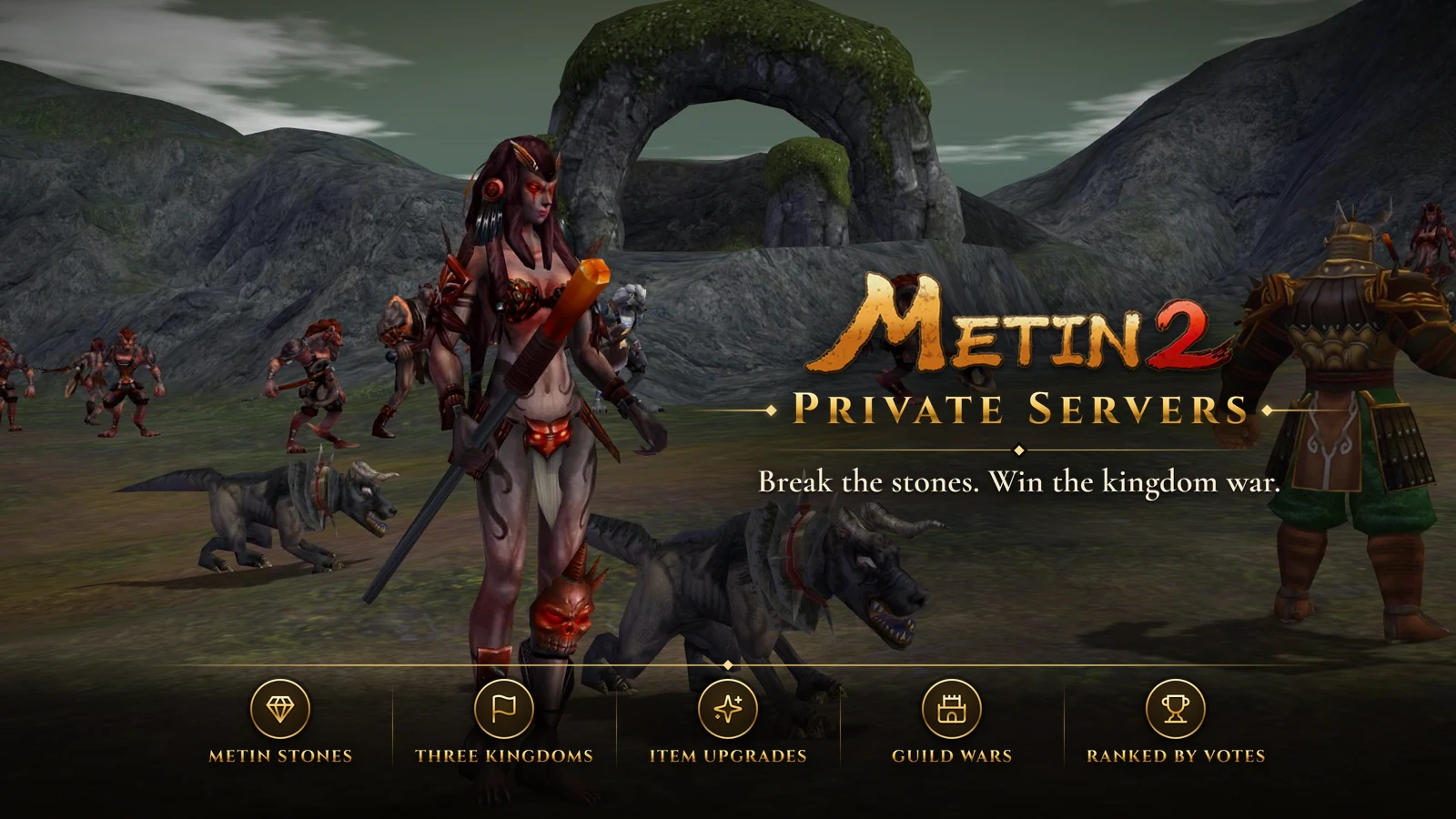
Metin2 is the Korean hack-and-slash MMORPG from Ymir Entertainment, released in Korea in 2004 and worldwide from 2007, with Gameforge publishing it in Europe and other regions. It is built around fast real-time combat, a war between three kingdoms and the Metin stones that give the game its name: great stones that crash into the world and spawn monsters until players destroy them. More than two decades on, the official game is still running, with expansions such as Conquerors of Yohara and Tyranny of Aamon adding new regions and endgame systems.
Metin2 also has a large private-server scene. Players sort servers by era and by how hard the grind is, and for many of them a private server is the only way to play the version of Metin2 they remember.
Kingdoms, Classes and the Upgrade Grind
You start in one of three kingdoms - Shinsoo, Chunjo or Jinno - and the kingdoms are at war. Each character is a Warrior, Ninja, Sura or Shaman, later joined by the Lycan, and every class splits into two skill trees, so two warriors can play very differently. Guilds fight guild wars, and a rank system running from Chivalric to Cruel tracks how players behave: a negative rank makes you a target for your own kingdom and can cost you items when you die.
Progression is a long grind of leveling, training skills and above all upgrading equipment and rolling the right bonuses onto it. The currency, Yang, flows through a player-driven economy where the best items change hands for enormous sums, which is why the market matters as much as the monsters.
What to Look For in a Metin2 Private Server
Old school, middle school or new school
This is how Metin2 players describe a server's era. Old school servers recreate the early game, with a low level cap, the original four classes and few of the later systems. Middle school servers add a selection of later content while keeping the classic feel. New school servers include the newer classes, maps and endgame systems. Check the level cap, the class list and which systems are switched on.
Grind level and rates
Private servers range from hard, slow grinds to easy servers where you reach PvP within days. A hard server keeps items valuable for years; an easy one is a PvP sandbox. Check the EXP and drop rates, how much Yang drops, and how often Metin stones and bosses respawn.
The item shop
The official game is free to play with an item shop, and private servers usually have one too. Costumes and convenience items are fine. Upgrade materials, bonus items and ready-made gear sold for money are pay-to-win in a game that is decided by equipment.
Kingdom balance and PvP rules
Kingdom wars only work when the three kingdoms are evenly matched. Check the population of each, how the server handles player killing and rank, and whether there are events that bring all three kingdoms into the same fight.
Bots, anti-cheat and language
Farm bots and hacks wreck the Yang economy quickly, so look for visible anti-cheat and published bans. Many Metin2 servers are also built around one language community, so check the main language in chat before you start.
Getting Started
Pick the era first, then the grind level, then the kingdom with the fewest players. Choose your class and skill tree with PvP in mind, join a guild early, and save your Yang for upgrades rather than spending it on the first shiny item you see. Vote for the server you play on; rankings here start again every month, so the list below shows where players are now.
Top 2 Metin2 Private Servers (2026)
Ranked by this month's counted votes. Order last changed October 19, 2026.
LEADER2
LEADER2 | 1-105 Orta Emek · P2W Karşıtı Büyük Açılış: 9 Ekim 2026 – 20:00 Klasik Metin2 ruhunu yaşatan, dengeli ve uzun soluklu bir 1-105 Orta Emek ...
Saphyros2
APHYROS2 – IMPROVED CLASSIC METIN2 Experience classic Metin2 with modern systems! Medium-hard PvM & PvP, Level 120, Adept/Mastery progression, rare...
Frequently Asked Questions
What is the best Metin2 private server in 2026?
Based on our live vote rankings, LEADER2 is currently the #1 ranked Metin2 private server with 4 votes this month.
How many Metin2 private servers are there?
We currently track 2 active Metin2 private servers on our platform, ranked by this month's counted votes.
How often are these rankings updated?
The ranking is read live from this month's vote counts, so it changes as players vote. Its order last changed on October 19, 2026.
How We Rank Metin2 Servers
Servers are listed by the number of counted votes they received this month, most first. Each player can vote for a server once every 24 hours, and every vote is checked for VPNs, proxies and bots before it counts. Vote counts start again from zero on the 1st of every month, and a server that goes 14 days without a counted vote is hidden from the lists until it gets one. Player reviews and ratings are shown on each server's page but do not change its position. How rankings work has the full rules.
- Ordered by this month's counted votes
- One vote per server every 24 hours
- VPN, proxy and bot checks on every vote
- A fresh start on the 1st of every month