
Best S&Box Servers 2026 - Games, Gamemodes & Community Guide
Find the best S&Box servers in 2026. How s&box games and servers work, persistent vs match servers, rules and creator updates, ranked by real player votes.
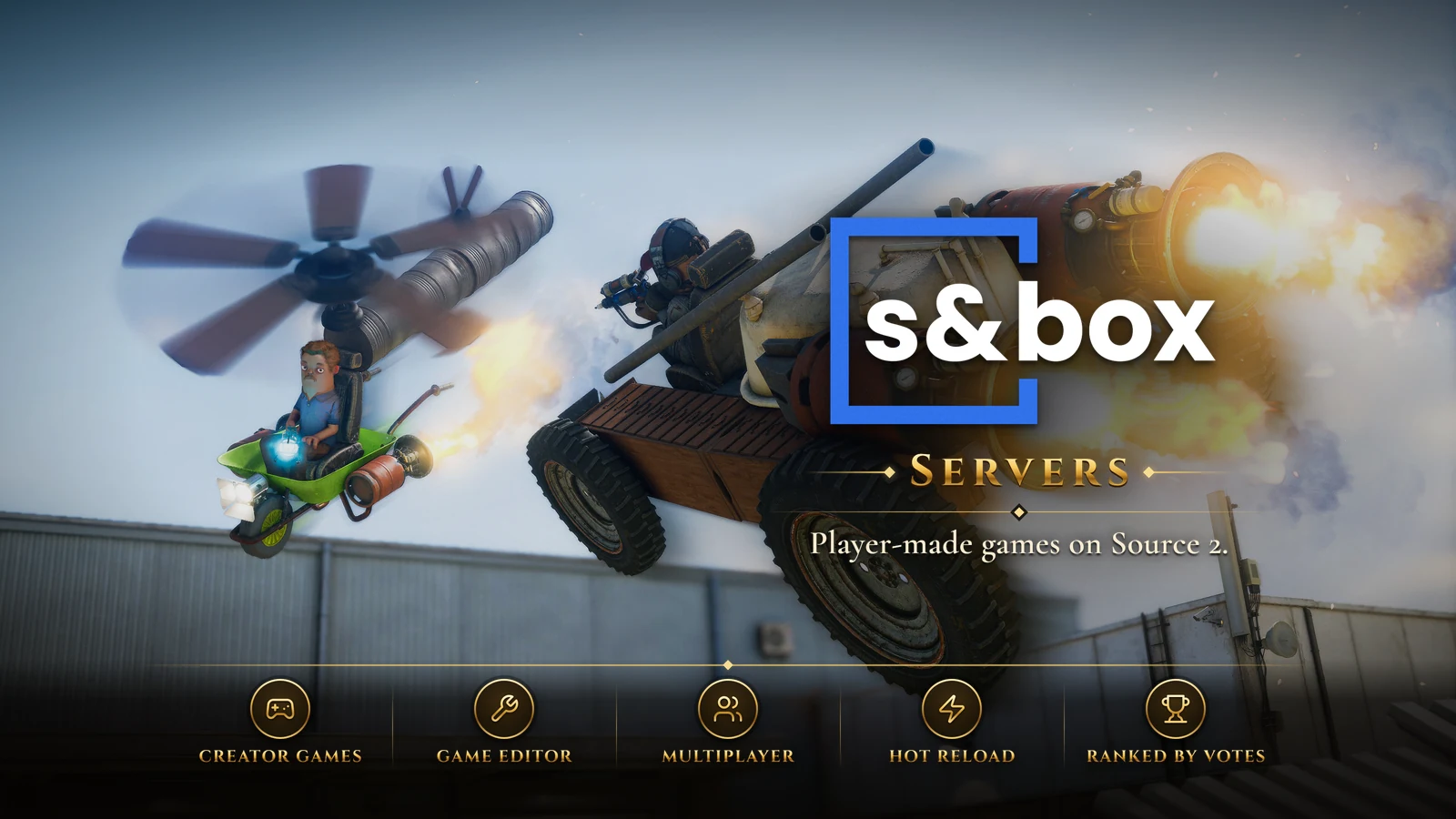
S&box is Facepunch Studios' game creation platform, built on Valve's Source 2 engine and described by Facepunch as the spiritual successor to Garry's Mod. It released on Steam on April 28, 2026 for Windows, and a native Linux version followed in September 2026. Creators build games in a full editor with C# scripting, and players can jump into those games without installing or subscribing to anything first.
Facepunch released the s&box source code under the MIT license in November 2025, and in March 2026 it announced a deal with Valve that lets creators export their games as standalone Steam titles. For players, the result looks a lot like Garry's Mod did at its best: a platform full of player-made gamemodes, with communities forming around the servers that run them.
A Platform of Player-Made Games
Multiplayer is built into the engine, so most s&box games are made to be played together. Creators work with a scene system, a map and terrain editor, visual scripting through ActionGraph and shaders through ShaderGraph, and a hotload system that applies code changes without a restart. That speed means games can change from one week to the next.
It also means quality varies a lot. Shortly after launch Facepunch said it would push low-effort AI-generated games off the main page, and a rating system now lowers the visibility of games built on generated assets. The games that last are the ones with active creators and a community around them, and a listed s&box server is usually one of those communities: a server running a particular game, with its own rules, admins and regulars.
What to Look For in an S&box Server
Which Game It Runs
Every s&box server is built around a specific game, from sandbox building to roleplay, deathmatch or something entirely new. Look up that game first: who made it, how recently it was updated and what other players say about it. Anyone can publish a game on s&box, so the creator's track record is worth a look too. A great community cannot save a broken game for long.
Persistent World or Quick Matches
Some servers keep a persistent world with progression, property or a roleplay economy; others run short rounds that you can drop into for ten minutes. The listing or the server's Discord should make clear which it is, and the two suit very different evenings. Persistent servers ask for more of your time but give you a reason to come back; match-based servers are easier to try and easier to leave.
Rules and Moderation
Open sandbox and roleplay servers live or die by their staff, just as they did in Garry's Mod. Look for published rules, admins who are online at your hours and a clear way to report griefing or harassment. A server that says nothing about moderation usually has none.
Creator Activity and Updates
S&box is young and moves fast. A server whose game is updated regularly, and whose team announces changes before they land, is far more likely to still be around in six months than one running a game nobody maintains.
Paid Extras
Some games and servers sell extras. Cosmetics and supporter tags are fine; anything that buys power in a competitive mode or a shortcut through a server's progression undermines everyone else. Check before you spend.
Getting Started
Install s&box from Steam, then try the game behind a server before committing to its community. Join the Discord, read the rules and spend a session or two with the regulars. The ranking below lists the S&box servers players vote for here. Vote for the server you play on - rankings start again every month, so newer communities can climb as quickly as established ones.
Top S&Box Servers (2026)
No S&Box servers are listed yet. Servers added to the site appear here, ranked by this month's player votes.
Frequently Asked Questions
What is the best S&Box server in 2026?
No S&Box server is listed here yet. The first ones to be added appear in the ranking on this page, ordered by this month's votes.
How many S&Box servers are there?
None are listed here yet. A S&Box server added to the site appears in this ranking as soon as it is active.
How often are these rankings updated?
The ranking is read live from this month's vote counts, so it changes as players vote. Its order last changed on October 13, 2026.
How We Rank S&Box Servers
Servers are listed by the number of counted votes they received this month, most first. Each player can vote for a server once every 24 hours, and every vote is checked for VPNs, proxies and bots before it counts. Vote counts start again from zero on the 1st of every month, and a server that goes 14 days without a counted vote is hidden from the lists until it gets one. Player reviews and ratings are shown on each server's page but do not change its position. How rankings work has the full rules.
- Ordered by this month's counted votes
- One vote per server every 24 hours
- VPN, proxy and bot checks on every vote
- A fresh start on the 1st of every month