
Best Tales of Pirates Private Servers 2026 - Ships & Classes Guide
Find the best Tales of Pirates private servers in 2026. ToP and ToP II content, advanced classes, ship building and mall policy, ranked by real player votes.
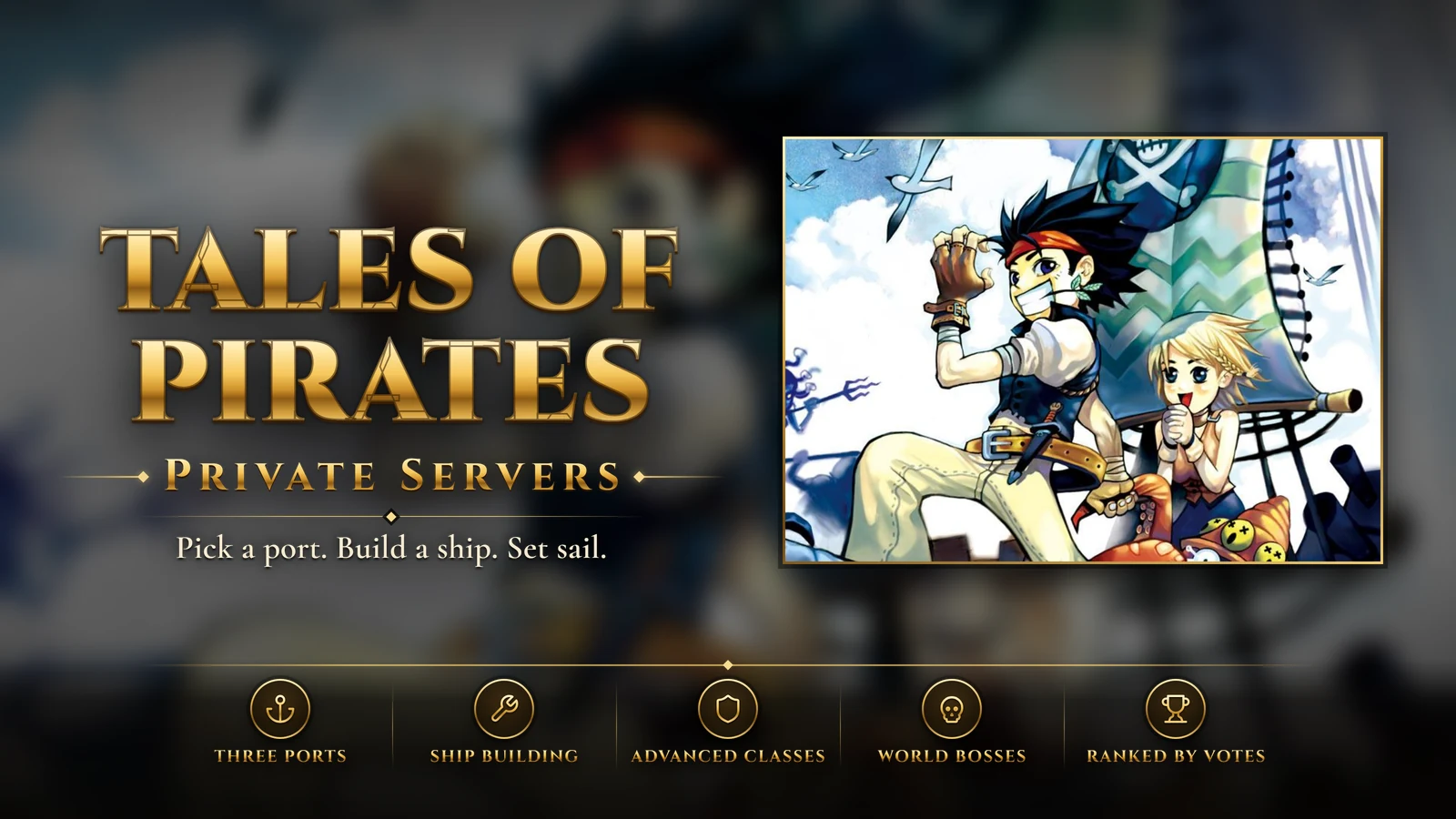
Tales of Pirates is the name IGG gave to the English release of MOLI's Chinese pirate MMORPG, the same game players in Asia know as Pirate King Online. It entered open beta in March 2007 and became one of IGG's best-known free-to-play titles, with chibi-style characters, a world of islands to explore and a ship of your own from level 15.
In 2011 IGG followed it with Tales of Pirates II, a direct sequel that let players migrate their characters, and closed that on February 29, 2016. Fan-run private servers have kept the game sailing since, some built on the original and some drawing on the sequel's content, and they are where most of the community plays today.
Three Ports and a Ship of Your Own
Your story starts in one of three areas: Argent, Shaitan or Icicle - a forested port city, a desert town and a frozen northern region. Each has its own beginner quests, and the three become the hubs you sail between later.
Class planning starts at character creation. The four models - Lance, Carsise, Phyllis and Ami - each allow only some classes, so check that your model can reach the class you want. The primary classes are Swordsman, Hunter, Explorer and Herbalist, and the advanced classes are Champion and Crusader for Swordsmen, Sharpshooter for Hunters, Voyager for Explorers, and Cleric and Seal Master for Herbalists.
At sea the game opens up. You buy a ship from level 15 and fit it out with parts - bow, engine, cannons and other components - that change how it performs in a fight and on long voyages. Naval battles, sea monsters, treasure maps and island battles fill the late game, alongside world bosses, instanced battles from one-on-one to five-on-five, guild PvP and the Demonic World. A fairy companion travels with you through all of it.
What to Look For in a Tales of Pirates Private Server
Original or Sequel Content
Servers differ in what they are built on. Some recreate the original Tales of Pirates as closely as possible, while others bring in content from Tales of Pirates II or add their own maps and gear. Ask which base the server uses and what it has added, so the game you join is the one you were expecting.
Advanced Class Balance
Six advanced classes have to coexist in PvP. A server where Champions or Sharpshooters dominate guild fights pushes everyone toward the same picks, and parties start missing Clerics. Look for staff who publish balance changes and explain them, and ask players which classes feel weak.
Sea Content That Works
Some servers polish land content and neglect the water. Check that ship parts, naval combat, sea monsters and treasure maps all work, and that sailing between Argent, Shaitan and Icicle is worth doing rather than skipped with teleports. A Tales of Pirates server without a living sea has lost its point.
Mall Currency and Gear
Most servers run an item mall. Check whether its currency can be earned through play or events, and whether it sells gear, upgrade items or ship parts that decide PvP. Costumes and convenience are easy to live with; power for money is not.
Uptime and Updates
A pirate server is a long voyage. Look at how long the server has been online, how it handles crashes and rollbacks, and how often it posts patch notes. Steady small updates beat a big launch followed by silence.
Choosing Your Port
Decide on your advanced class first and pick a character model that can reach it. Then choose a server whose base and sea content match what you want, and get your first ship as soon as level 15 allows. Vote for the server you play on; rankings here start again every month, so the list below follows where players are now.
Top Tales of Pirates Private Servers (2026)
No Tales of Pirates private servers are listed yet. Servers added to the site appear here, ranked by this month's player votes.
Frequently Asked Questions
What is the best Tales of Pirates private server in 2026?
No Tales of Pirates private server is listed here yet. The first ones to be added appear in the ranking on this page, ordered by this month's votes.
How many Tales of Pirates private servers are there?
None are listed here yet. A Tales of Pirates private server added to the site appears in this ranking as soon as it is active.
How often are these rankings updated?
The ranking is read live from this month's vote counts, so it changes as players vote. Its order last changed on October 13, 2026.
How We Rank Tales of Pirates Servers
Servers are listed by the number of counted votes they received this month, most first. Each player can vote for a server once every 24 hours, and every vote is checked for VPNs, proxies and bots before it counts. Vote counts start again from zero on the 1st of every month, and a server that goes 14 days without a counted vote is hidden from the lists until it gets one. Player reviews and ratings are shown on each server's page but do not change its position. How rankings work has the full rules.
- Ordered by this month's counted votes
- One vote per server every 24 hours
- VPN, proxy and bot checks on every vote
- A fresh start on the 1st of every month