
Best Yulgang Private Servers 2026 - Order, Chaos & Version Guide
Find the best Yulgang private servers in 2026. Order vs Chaos factions, client versions, rates, gear upgrades and language, ranked by real player votes.
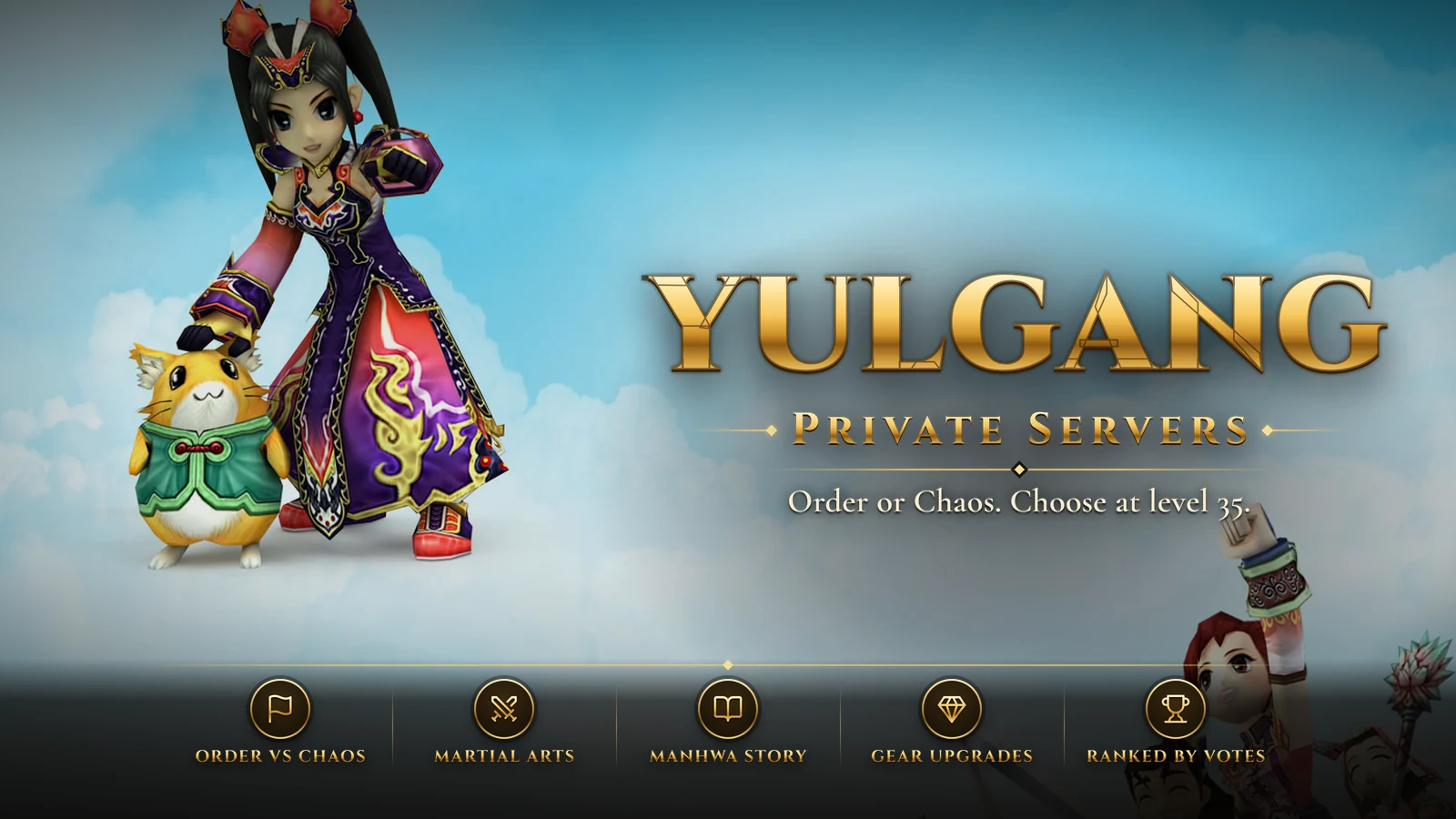
Yulgang is a Korean martial arts MMORPG developed by KRG Soft and launched in Korea on November 25, 2004, with Mgame running the Korean service. It is based on Yul-Hyul-Gang-Ho, a well-known Korean martial arts comic, and carries the comic's mix of action and comedy into a bright, cartoonish world. The game spread across Asia, with servers in Japan, China, Taiwan, Thailand and Indonesia, and reached the United States as Scions of Fate. Spin-offs followed, including a short-lived 3D sequel and several mobile versions.
For many players, Yulgang private servers are a way back to a specific version of the PC game they played years ago, often with faster rates and a community in their own language. This guide covers what makes Yulgang distinctive and what to check before you pick a server.
Order, Chaos and the Martial World
Yulgang's subtitle, Balance of Power, points to its central choice. At level 35, after the second promotion quest, every character joins either The Order or Chaos. The two factions have their own stories, character looks, clothing and weapons, and they are natural enemies in PvP. Before that point you level as one of the game's martial arts classes, each with its own weapon style, and promotions open up new skills as you climb.
Around that choice sits a classic Korean MMO: grinding and questing through themed zones, collecting and upgrading gear, joining a guild and fighting the other faction. The comic-book look keeps the mood lighter than most martial arts games, but the PvP and the upgrade grind are as serious as any.
What to Look For in a Yulgang Private Server
Game Version
Yulgang was updated for many years, and each version added classes, maps, level ranges and gear tiers. A private server usually builds on one version, so check which classes and areas exist and what the level cap is. An older version may feel closest to what you remember; a newer one gives you more to do.
Faction Balance
Because Order and Chaos are permanent sides, population balance shapes everything from leveling safety to PvP events. Ask how the factions are split before your character reaches level 35, and whether the server does anything to keep them even.
Rates and Upgrades
Leveling and gear enhancement are where most of your time goes. Look at EXP and drop rates together with upgrade success chances. Very generous upgrades make everyone's gear the same; very harsh ones push players toward the shop.
Shop Policy
The official game is free to play and sells virtual goods. On a private server, check whether the shop sells upgrade materials, stat items or finished high-end gear, and whether premium currency can be earned through play or voting.
Language and Community
Much of Yulgang's player base has always been in Asia, and a server usually runs in one main language. Check the client language and where most players are based, since faction fights and guild activity happen at that community's peak hours.
Early Versions or Later Ones
Players choosing a Yulgang server usually weigh an early version, with fewer classes and a lower cap, against a later one with more content and often custom changes. Early versions suit returning players chasing the game they remember; later ones suit players who want more systems to master. Neither is better - they serve different people.
Getting Started
Pick a server on the version you want, check the faction balance before level 35, and choose your class with your faction plans in mind. Join a guild early, because PvP and upgrades are much easier with help. If a server earns your time, vote for it. The ranking below lists the Yulgang servers players vote for here, and it starts again every month.
Top Yulgang Private Servers (2026)
No Yulgang private servers are listed yet. Servers added to the site appear here, ranked by this month's player votes.
Frequently Asked Questions
What is the best Yulgang private server in 2026?
No Yulgang private server is listed here yet. The first ones to be added appear in the ranking on this page, ordered by this month's votes.
How many Yulgang private servers are there?
None are listed here yet. A Yulgang private server added to the site appears in this ranking as soon as it is active.
How often are these rankings updated?
The ranking is read live from this month's vote counts, so it changes as players vote. Its order last changed on October 13, 2026.
How We Rank Yulgang Servers
Servers are listed by the number of counted votes they received this month, most first. Each player can vote for a server once every 24 hours, and every vote is checked for VPNs, proxies and bots before it counts. Vote counts start again from zero on the 1st of every month, and a server that goes 14 days without a counted vote is hidden from the lists until it gets one. Player reviews and ratings are shown on each server's page but do not change its position. How rankings work has the full rules.
- Ordered by this month's counted votes
- One vote per server every 24 hours
- VPN, proxy and bot checks on every vote
- A fresh start on the 1st of every month